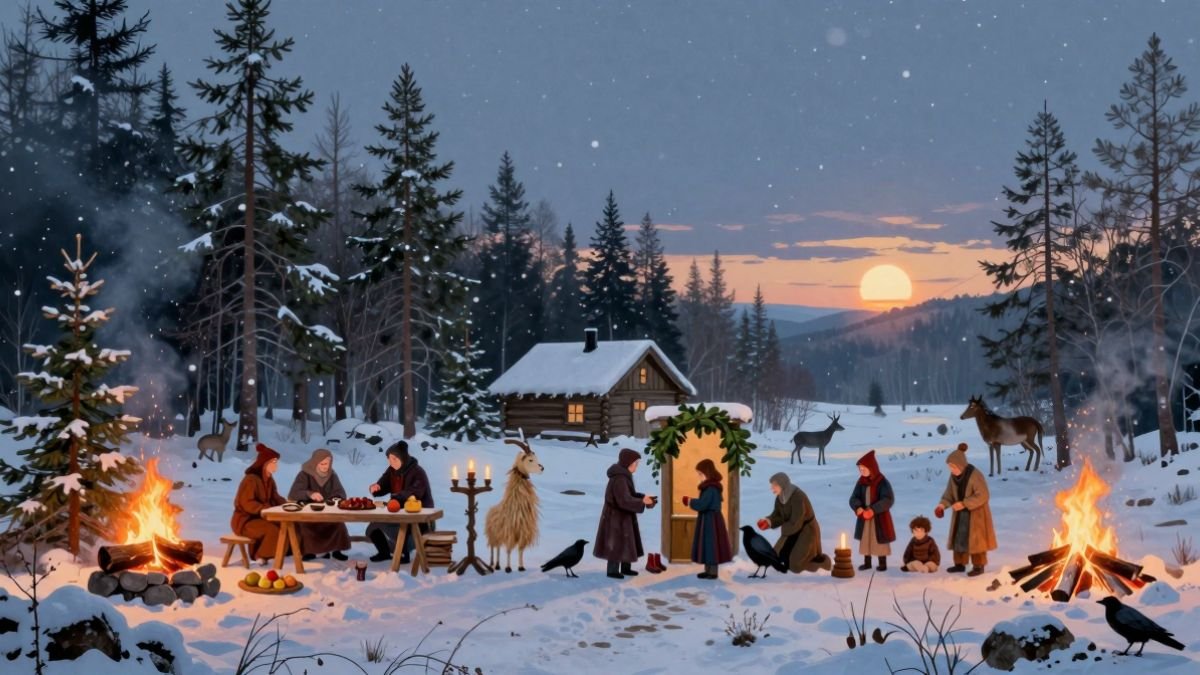
You’ve probably heard of the twelve days of Christmas, but tucked into the quiet heart of winter lies an older, deeper tradition: the thirteen days of Yule. Long before twinkling lights and gift wrap, ancient Northern European cultures marked the darkest stretch of the year with fire, feasting, and a slow, intentional countdown toward the returning sun. Today, as we rush through December, this ancient framework offers something rare—a way to pause, reflect, and celebrate each day with meaning.
Yule isn’t a single night. It’s a season, traditionally beginning around the winter solstice (December 21) and stretching through the new year. The thirteen-day structure varies by tradition, but the core idea remains: each day carries its own symbolic theme, from renewal and protection to courage and gratitude. And the beauty? You don’t need to be a historian or a practicing pagan to tap into it. With a few small rituals, you can turn these thirteen days into a modern, meaningful practice that grounds you through the holiday chaos.
What the ’13 days of Yule’ actually refers to
The thirteen days of Yule trace back to Norse and Germanic traditions, where midwinter was both a vulnerable and sacred time. The sun had retreated to its lowest point, darkness reigned, and communities gathered to honor the gods, ancestors, and the promise of light’s return.
Different sources outline the days slightly differently, but most agree on a few key beats:
- The first days focus on preparation and cleansing—clearing out the old year, both literally and spiritually.
- The middle days celebrate protection, abundance, and community—honoring home, family, and the bonds that sustain us.
- The final days turn toward renewal and intention—setting the tone for the year ahead.
Unlike modern holidays that peak on a single date, Yule asks you to stretch celebration across time, to sit with each theme, and to let meaning accumulate slowly.

Day-by-day themes: what each day can symbolize
Here’s a modern interpretation of the thirteen days, blending historical symbolism with practical focus:
Day 1 (Dec 21/22 – Winter Solstice): Renewal and rebirth. The longest night, the return of the sun.
Day 2: Reflection. Look back on the year—what worked, what didn’t.
Day 3: Gratitude. Honor the people, moments, and small wins that carried you.
Day 4: Protection. Set boundaries, cleanse your space, ward off what drains you.
Day 5: Abundance. Celebrate what you have, not what you lack.
Day 6: Community. Reach out, share a meal, strengthen bonds.
Day 7: Rest. The midpoint. Do nothing. Let yourself be still.
Day 8: Courage. Name one fear you’re ready to face in the new year.
Day 9: Creativity. Make something with your hands—food, art, a fire.
Day 10: Ancestors and memory. Honor those who came before, or the version of yourself you’ve outgrown.
Day 11: Joy. Laugh, play, let something be light.
Day 12: Release. Write down what you’re letting go, then burn it.
Day 13 (Jan 2): Intention. Choose one word or focus to carry forward.
You don’t have to follow this list to the letter. The point is to give each day a lens, a way to slow down and notice.
A minimalist daily ritual (takes 5 minutes)
You don’t need an altar, a bonfire, or a degree in Norse mythology. Here’s a simple, repeatable structure:
Morning:
– Light a candle (or turn on a lamp).
– Say the day’s theme out loud: “Today is about gratitude.”
– Take three slow breaths.
Evening:
– Write one sentence in a notebook about how that theme showed up—or didn’t.
– Blow out the candle (or turn off the lamp).
That’s it. Five minutes, twice a day. Over thirteen days, you’ll have a small record of your inner weather, a map of where you were when the year turned.

Family-friendly ideas to celebrate together
If you’re celebrating with kids, partners, or housemates, here are a few ways to make Yule tangible:
- Yule log (the real kind): Find a small log or thick branch. Each day, carve or paint a symbol on it—sun, heart, star. Burn it on the final day, or keep it as a winter keepsake.
- Daily story time: Read a myth, folktale, or poem tied to winter. Norse sagas, yes, but also anything that feels seasonally right.
- Nature walks: Collect pinecones, evergreen branches, or stones. Arrange them on a windowsill or table as the days progress.
- Gratitude jar: Each person writes one thing they’re thankful for each day. Read them all aloud on Day 13.
- Feast night: Pick one night (Day 6 or 7 works well) to cook a big, slow meal together. No phones, no TV—just food and conversation.
The goal isn’t perfection. It’s presence.
How to end with a ‘carry-forward’ intention
Day 13 is your anchor. After twelve days of reflection, release, and small rituals, you’ll have a clearer sense of what matters. Now, distill it.
Sit down with your notebook. Look back at what you wrote. Then ask:
- What theme kept coming up?
- What felt hard to let go of?
- What do I want more of in the months ahead?
Choose one word or one short phrase to carry into the new year. Not a resolution—a compass. Examples:
- “Courage.”
- “Say no more often.”
- “Make time for stillness.”
- “Trust the process.”
Write it on a slip of paper. Fold it, keep it in your wallet or on your desk. When you feel scattered in February or July, pull it out. Let it remind you of what you knew in the dark.

Why this matters now
We live in a culture that treats late December like a sprint—shop, wrap, cook, post, perform. The thirteen days of Yule offer the opposite: a slow burn, a deepening, a chance to meet winter on its own terms.
You don’t have to call it Yule. You don’t have to explain it to anyone. But if you’re tired of rushing through the holidays and waking up in January feeling hollow, this might be the structure you need.
Start tonight. Light a candle. Say the word “renewal” out loud. Take three breaths.
That’s Day 1. Twelve more to go.