We’ve been told to “just put on some relaxing music” when stress hits. But here’s the truth: generic spa playlists and ocean sounds might actually be keeping you anxious longer than necessary. In 2026, the science is clear—personalized calming beats, matched to your specific mood and nervous system state, can reduce cortisol levels up to 65% faster than one-size-fits-all solutions.
The problem? Most of us are choosing music the same way we choose our stress—randomly, hoping something sticks. Let’s change that.
What tempo does to your heart rate (and why 60-80 BPM is the sweet spot)
Your heart doesn’t listen to lyrics. It listens to beats per minute (BPM). When you’re stressed, your heart rate spikes—often to 90-110 BPM or higher. Playing music that’s too fast (think 120+ BPM pop hits) keeps your nervous system in overdrive, no matter how “happy” the song feels.
Here’s what actually works:
- 60-80 BPM = The zone where your heart rate naturally begins to slow. Think lo-fi beats, classical adagios, or ambient electronica.
- Below 60 BPM = Deep calm. Best for sleep or meditation. Examples: Marconi Union’s “Weightless” (scientifically proven to reduce anxiety by 65%).
- 80-100 BPM = Gentle energy. Good for transitioning out of stress without crashing.
The shift isn’t instant, but within 5-7 minutes, your body starts to sync with the tempo. It’s called “entrainment,” and it’s why the right music feels like a weighted blanket for your brain.

Lyrics vs. instrumental when you’re anxious—the verdict
When your mind is racing, lyrics can hijack your thoughts. Even if the song is “relaxing,” your brain is still processing language, meaning, and emotional subtext. That’s cognitive load you don’t need.
The rule: If you’re overthinking, spiraling, or mid-panic, go instrumental. Your nervous system needs a break from words—including the ones in your head. Save lyric-heavy tracks for when you’re already calm and just need a mood boost.
Three playlists by mood (because stress isn’t one-size-fits-all)
Playlist 1: Overthinking/Racing Thoughts
- Lo-fi hip-hop (Chillhop, Jinsang)
- Ambient piano (Ólafur Arnalds, Nils Frahm)
- Nature sounds layered with soft synths
Playlist 2: Anger/Irritation
- Slow post-rock (Explosions in the Sky, Sigur Rós)
- Downtempo electronica (Bonobo, Tycho)
- Avoid silence—your brain will fill it with more anger
Playlist 3: Shutdown/Numbness
- Gentle acoustic (Iron & Wine, José González)
- Soft indie folk (The Paper Kites, Novo Amor)
- Gradual build-up tracks that don’t demand energy

The 10-minute ‘music + breath’ session that resets your nervous system
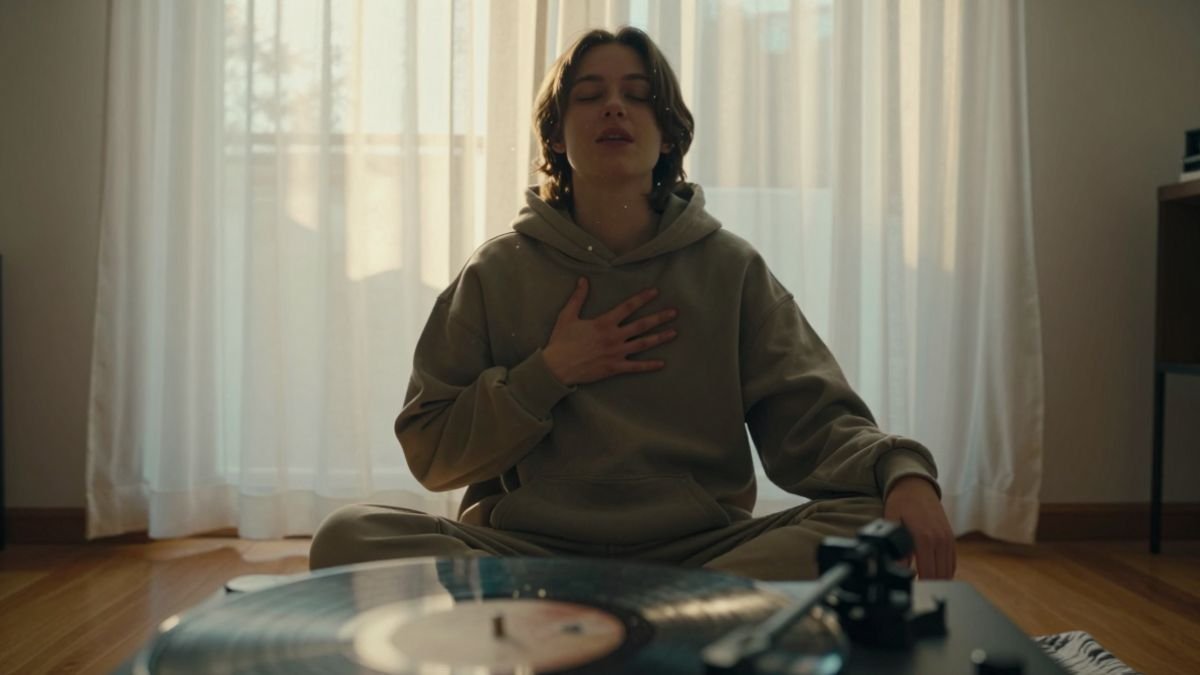
This isn’t meditation. It’s active listening paired with intentional breathing—and it works in under 10 minutes.
Here’s how:
- Choose a 60-70 BPM instrumental track. Queue it up.
- Sit or lie down. Close your eyes if you can.
- Breathe in for 4 counts, out for 6 counts. Match the rhythm to the music’s pulse.
- Focus only on the bass line or a single instrument. Let everything else blur.
- Stay for the full track (3-5 minutes minimum). Don’t skip. Don’t check your phone.
- Repeat with 1-2 more songs if you’re still wired.
By the end, your heart rate should drop 10-15 BPM. You’ll know it worked if your shoulders feel heavy and your jaw unclenches.
How to notice the moment music stops helping (and what to do instead)
Sometimes, music becomes white noise—you’re playing it, but you’re not hearing it. That’s your cue to stop and check in. Ask yourself:
- Am I dissociating or actually calming down?
- Is this song making me feel something, or am I numbing out?
- Have I been listening for 30+ minutes without a break?
If music stops working: Try silence for 5 minutes. Or switch to a different sensory input—a cold washcloth on your face, barefoot walking, or humming a single note. Your nervous system might need a reset, not more stimulation.

Quick recommendations by activity (because context matters)
Commute stress (15-30 min):
- “Spotify’s ‘Deep Focus'” or “Brain Food” playlists
- Avoid talk radio or podcasts—your brain is already processing traffic
Pre-sleep wind-down (30-60 min):
- “Sleepy” by Max Richter (8-hour album)
- Avoid anything with sudden crescendos or tempo changes
Work/Focus under pressure:
- Binaural beats (40 Hz for focus, 10 Hz for calm)
- “Epic classical” (Hans Zimmer, Ludovico Einaudi) if you need gentle energy
Post-argument cooldown:
- Sad indie playlists (counterintuitive, but they validate your emotions)
- Avoid upbeat tracks—they’ll feel tone-deaf
The bottom line
The right music for stress isn’t about “relaxing sounds”—it’s about matching the tempo, tone, and texture to where your nervous system is right now. In 2026, we’re moving past generic playlists and into personalized sound therapy. Start noticing what actually shifts your body, not just what’s supposed to.
Your stress is specific. Your music should be, too.