You’ve probably seen the 13 wishes ritual floating around social media—a gentle, hopeful way to close out the year by writing down thirteen things you want to manifest before the next one begins. It sounds simple, even magical. But if you’re someone who turns every intention into a checklist and every checklist into a scoreboard, this ritual can quickly morph from a moment of hope into a source of quiet dread.
The good news? The 13 wishes ritual doesn’t have to be another thing you fail at. With a few mental-health-friendly guardrails, it can become a grounding practice that invites possibility without demanding perfection.
What the 13 wishes ritual actually is
The 13 wishes ritual is a New Year’s tradition with roots in various folk practices, though its exact origin is debated. The premise is straightforward: before the new year begins, you write down thirteen wishes or intentions—things you hope to experience, create, or invite into your life over the coming twelve months.
Unlike resolutions, which often carry the weight of obligation and binary success-or-failure outcomes, wishes are softer. They’re expressions of desire, not contracts with yourself. You’re not promising to run a marathon or quit sugar forever. You’re simply naming what you hope for.
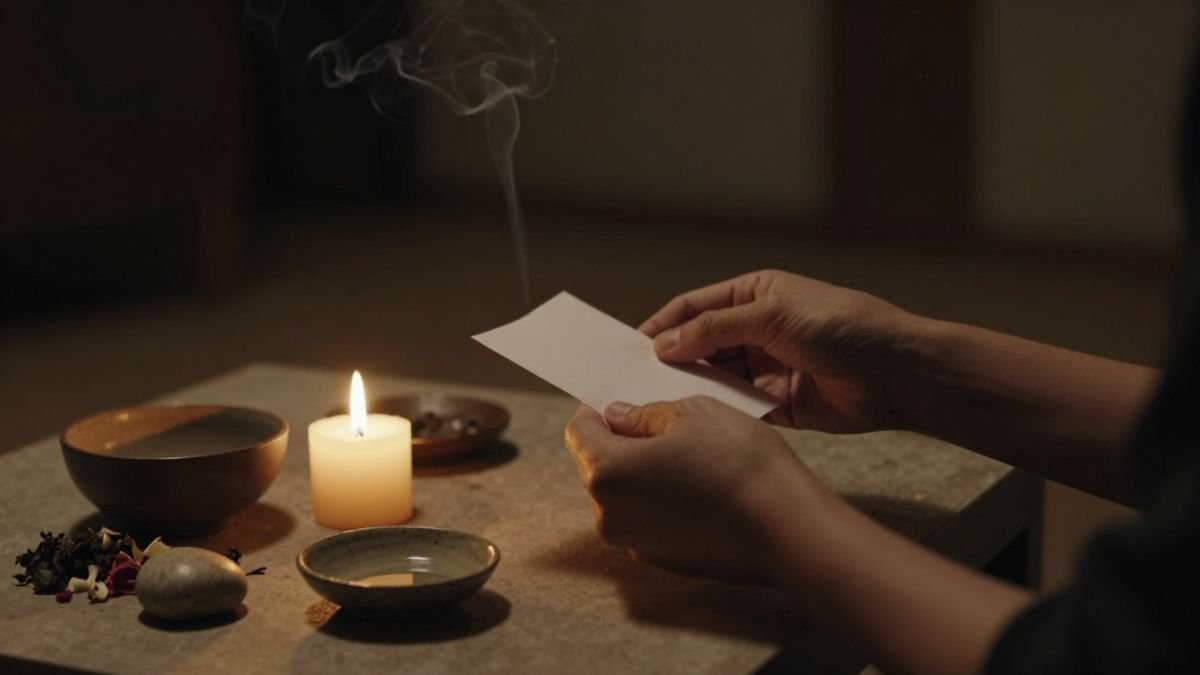
Some people write their wishes on individual slips of paper and keep them in a jar. Others write them in a journal or on a single sheet they fold and tuck away. The ritual is less about the format and more about the act of pausing, reflecting, and articulating what matters to you as one year ends and another begins.

When to start and how to write your wishes
Timing varies depending on tradition, but most people begin the ritual between December 23 and December 31. Some prefer to write their wishes on New Year’s Eve, while others like to start a bit earlier to give themselves time to reflect without the pressure of a countdown.
Here’s a simple way to approach it:
- Find a quiet moment. You don’t need candles or incense (though they’re nice). Just a few minutes when you won’t be interrupted.
- Use pen and paper. There’s something grounding about writing by hand. It slows you down.
- Write in present or future tense. Frame your wishes as if they’re already unfolding. “I find work that energizes me” feels different than “I want to find work that energizes me.”
- Don’t overthink it. If a wish feels right, write it down. You can always adjust later.
You don’t have to write all thirteen in one sitting. Some people spread the process over a few days, adding wishes as they come.
Examples of grounded, realistic wishes
One of the biggest pitfalls of any intention-setting practice is aiming so high that you set yourself up for disappointment. Your wishes don’t have to be grand or life-altering. They can be quiet, specific, and deeply personal.
Here are some examples that balance aspiration with realism:
- I have more evenings where I feel genuinely rested.
- I strengthen one important friendship.
- I learn to cook three new meals I actually enjoy.
- I spend less time scrolling and more time reading.
- I find a form of movement that doesn’t feel like punishment.
- I say no to at least one thing that drains me.
- I have a conversation I’ve been avoiding.
- I create something with my hands.
- I take a trip, even if it’s just a weekend away.
- I ask for help when I need it.
- I feel proud of something I made or did.
- I laugh more often.
- I give myself permission to rest without guilt.
Notice how these wishes are specific enough to feel real but flexible enough to unfold in different ways. They’re not tied to exact metrics or timelines. They leave room for life to surprise you.

How to avoid turning wishes into self-pressure
The 13 wishes ritual can become toxic if you treat it like a performance review. Here’s how to keep it gentle:
Reframe “failure” as redirection. If a wish doesn’t come true, it doesn’t mean you failed. It might mean your priorities shifted, or the wish wasn’t what you actually needed. That’s information, not failure.
Allow wishes to evolve. You’re allowed to change your mind. If a wish stops resonating halfway through the year, let it go. You don’t owe it loyalty.
Avoid comparison. Your wishes are yours. They don’t need to be impressive or Instagram-worthy. If one of your wishes is “I want to feel less anxious in the mornings,” that’s just as valid as “I want to start a business.”
Don’t tie your worth to outcomes. Your value as a person is not determined by how many wishes come true. The ritual is a tool for reflection, not a test.
Keep it private if that helps. You don’t have to share your wishes with anyone. In fact, keeping them private can reduce the pressure to perform or explain.
A gentle weekly check-in plan
One way to stay connected to your wishes without obsessing over them is to build in a light, low-pressure check-in rhythm. Here’s a simple weekly practice:
Every Sunday (or whatever day works for you), spend five minutes with your list. You don’t have to do anything. Just read through your wishes and ask yourself:
- Which of these feels alive right now?
- Is there one small action I could take this week that aligns with any of these?
- Is there a wish I’m forcing that doesn’t feel right anymore?
Write down one tiny action step for the week—something so small it feels almost too easy. “Text one friend” or “Look up one recipe” or “Go to bed fifteen minutes earlier on Tuesday.”
That’s it. No grand plans, no multi-step strategies. Just one small gesture that keeps you gently tethered to what you hoped for.
At the end of each month, you can do a slightly longer check-in—maybe ten minutes—where you note any shifts, surprises, or wishes that have quietly started to unfold.

A final thought
The 13 wishes ritual works best when you treat it as an invitation, not an assignment. It’s a way to name what you hope for, to plant seeds without demanding they bloom on schedule.
You don’t have to be perfect at wishing. You don’t have to achieve all thirteen. You don’t even have to remember them all year. The act of writing them down—of pausing to ask yourself what you want—is already valuable.
So write your wishes. Tuck them away. Check in when it feels right. And if December 2026 rolls around and only three came true, or none, or all of them in ways you didn’t expect—that’s okay. You’ll still have learned something about what you needed, what you wanted, and who you were becoming.
That’s more than enough.