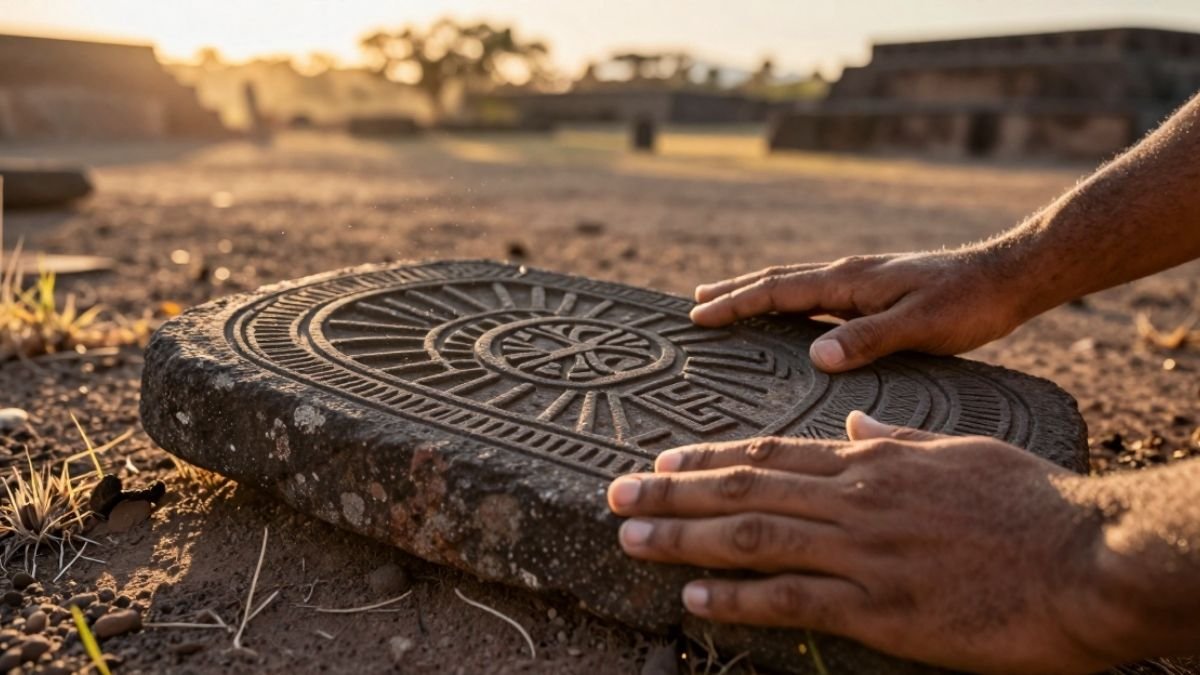
Have you ever wondered why an ancient Mesoamerican system is suddenly appearing all over your social media feed in 2025?
Aztec zodiac signs—technically called tonalpohualli day-signs—are capturing people’s attention because they offer something Western astrology doesn’t: a completely different lens for understanding personality and fate. While your sun sign is based on the month you were born, your Aztec day-sign is determined by the exact day, creating a 260-day sacred calendar that the Aztec people used for divination, ritual, and daily guidance.
The energy shifts when you realize there’s an entire cosmological system most of us were never taught. And now, people are digging into it—not just for novelty, but because it feels refreshingly grounded in nature, animals, and elemental forces.
Let’s walk through what this system actually is, how it works, and how you can discover your own sign with respect and curiosity.
Why Aztec zodiac signs are trending right now
The internet loves rediscovering ancient wisdom, especially when it challenges what we think we know. In 2025, Aztec astrology has become the “new” thing because it’s exotic, visual, and deeply symbolic—perfect for the algorithm.
But there’s more to it than virality. People are drawn to systems that feel less commercialized than Western horoscopes. The Aztec calendar doesn’t promise you’ll meet your soulmate next Tuesday. Instead, it connects you to natural cycles, animal archetypes, and the concept of tonalli—your life force or spiritual energy.
That said, this is not a game or a personality quiz. The tonalpohualli was (and still is) a sacred system used by Indigenous communities in Mexico. If you’re exploring it, approach with respect, not appropriation.

A brief history and cultural context
The Aztecs (or Mexica people) used two interlocking calendars: the 365-day solar calendar (xiuhpohualli) and the 260-day sacred calendar (tonalpohualli). The tonalpohualli governed spiritual life—birth dates, naming ceremonies, and divination.
Each of the 260 days was assigned a combination of a number (1–13) and a day-sign (20 total). These signs were tied to gods, animals, plants, and natural phenomena. A priest or tonalpohuaque would interpret your birth day to understand your destiny, strengths, and challenges.
Important: This system is still practiced today by Nahua and other Indigenous groups. It’s not a relic—it’s a living tradition. When you explore it, remember you’re stepping into someone else’s spiritual heritage. Learn with humility, not entitlement.
Overview of the 20 Aztec day-signs
Here’s a simplified breakdown of the main day-signs (tonalli) and what they represent. Each sign carries distinct energy and symbolism:
- Cipactli (Crocodile) — Primal creation, survival instinct, foundational energy
- Ehecatl (Wind) — Movement, communication, breath of life
- Calli (House) — Shelter, introspection, inner world
- Cuetzpalin (Lizard) — Agility, regeneration, adaptability
- Coatl (Snake) — Transformation, wisdom, kundalini energy
- Miquiztli (Death) — Endings, rebirth, shadow work
- Mazatl (Deer) — Grace, gentleness, timidity
- Tochtli (Rabbit) — Fertility, abundance, lunar cycles
- Atl (Water) — Flow, emotion, cleansing
- Itzcuintli (Dog) — Loyalty, guidance, spiritual companionship
- Ozomatli (Monkey) — Playfulness, creativity, trickster energy
- Malinalli (Grass) — Flexibility, resilience, healing
- Acatl (Reed) — Direction, structure, authority
- Ocelotl (Jaguar) — Power, courage, inner strength
- Cuauhtli (Eagle) — Vision, freedom, spiritual ascent
- Cozcacuauhtli (Vulture) — Purification, death rites, transformation
- Ollin (Movement/Earthquake) — Change, upheaval, cosmic shift
- Tecpatl (Flint Knife) — Sacrifice, cutting away, clarity
- Quiahuitl (Rain) — Nourishment, storms, emotional release
- Xochitl (Flower) — Beauty, art, pleasure, sensuality
Each sign also pairs with a number (1–13), which modifies its intensity and expression. For example, 1-Crocodile is raw, primal creation, while 13-Crocodile is the culmination of that energy—fully mature and transformative.

How to find your Aztec day-sign
You’ll need your exact birth date. Then:
- Use an online Aztec calendar converter (search “tonalpohualli calculator” or “Aztec zodiac calculator”). Enter your birth date.
- The tool will output your day-sign and number. For example: 7-Deer or 3-Jaguar.
- Research your sign’s symbolism. Read multiple sources—preferably ones written by or in consultation with Indigenous scholars.
Pro tip: Don’t just read the “positive traits.” The Aztec system acknowledges duality. Every sign has light and shadow. That’s where the real wisdom lives.
How Aztec signs compare to Western astrology
Similarities:
- Both systems assign meaning to birth dates.
- Both use archetypes (animals, elements, celestial bodies).
- Both can offer insight into personality and life path.
Differences:
- Western astrology is based on the sun’s position in the zodiac (12 signs, 30 days each). It’s solar and seasonal.
- Aztec astrology is based on a 260-day sacred cycle. It’s ritual, not astronomical. It’s not about “signs” in the zodiac sense—it’s about energetic imprints from the day you were born.
Western astrology asks: What constellation was the sun in?
Aztec astrology asks: What sacred day did your soul choose to enter the world?

Using this system for reflection (not fortune-telling)
Here’s the crucial part: The tonalpohualli is not a horoscope app.
It was designed for spiritual reflection and alignment, not daily predictions. If you’re exploring your Aztec sign, use it to:
- Understand your innate strengths and challenges.
- Reflect on patterns in your life that align with your sign’s energy.
- Connect with nature and animal symbolism in a deeper way.
- Honor the cyclical nature of time (rather than the linear Western view).
Don’t use it to justify bad behavior or make major life decisions. And definitely don’t commodify it—this isn’t a trend to slap on a T-shirt.
Final thoughts
The Aztec zodiac is an invitation to see yourself through a different cultural lens—one that’s rooted in earth, cosmos, and sacred time. If it resonates, learn more. If it doesn’t, that’s okay too.
But if you do explore it, do so with respect. Read Indigenous voices. Support Native artists and scholars. Don’t reduce a living tradition to an aesthetic.
Your day-sign is waiting. Approach it with reverence, and it will teach you something profound.