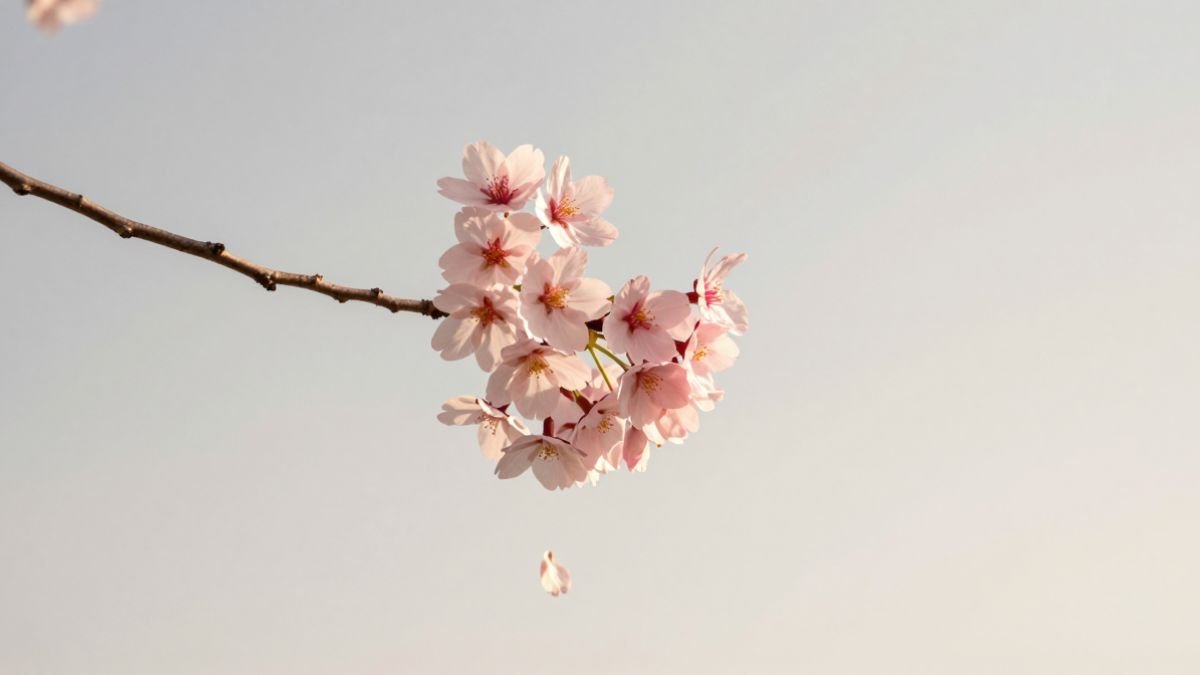
You already know what decision you’re avoiding. It’s the one that hums quietly in the back of your mind while you scroll, the one that resurfaces every Sunday night, the one you’ve been “waiting for the right time” to make for weeks or months. The ritual of sakura isn’t a mystical spell to summon luck. It’s a structured practice borrowed from the Japanese philosophy of cherry blossom season—a way to use the symbolism of fleeting bloom windows to finally commit to that choice you’ve been circling.
Cherry blossoms last roughly one week. In Japan, this narrow window is called sakura zensen—the cherry blossom front—and entire communities plan their year around it. The ritual of sakura applies that same urgency to personal decisions. It asks: What if you gave yourself a bloom window? What if you stopped waiting for perfect conditions and instead honored the impermanence of the moment?
What sakura actually symbolizes
Cherry blossoms represent two things simultaneously: renewal and impermanence. They arrive suddenly after winter’s dormancy, explode into full color, then fall within days. The Japanese aesthetic concept of mono no aware—the bittersweet awareness of transience—is built into every petal. This isn’t about romanticizing loss. It’s about recognizing that windows of opportunity close whether you act or not.
When you apply this to decision-making, the ritual becomes a deadline tool. Not the kind imposed by a boss or a lease agreement, but one you create intentionally to break the paralysis of “someday.” The bloom window exercise forces you to name the decision, set a short timeframe (three to seven days), and commit to one brave action before the window closes. No research spirals. No contingency planning. One action.

The bloom window exercise
Start by writing down the decision you’ve been postponing. Be specific. Not “I need to get healthier” but “I need to decide whether to join the gym near my office or commit to morning walks.” Not “I should deal with my finances” but “I need to open that credit card statement and call about the interest rate.”
Now assign it a bloom window: Pick a date three to seven days from today—December 28 through January 1, 2026, if you’re starting now. That’s your sakura deadline. Within that window, you must take one concrete action that moves the decision from internal to external. Send the email. Make the call. Book the appointment. Delete the app. Sign the form.
The action doesn’t have to solve the entire problem. It just has to be irreversible enough that you can’t pretend you’re still “thinking about it.” If you’re deciding whether to leave a job, the bloom window action might be updating your resume and sending it to one person in your network. If you’re deciding whether to end a relationship, it might be writing the conversation script and scheduling a specific time to have it.
A simple home ritual to anchor the decision
The physical ritual is deliberately minimal. You need three elements: a cup of tea (or any warm drink you can hold with both hands), a small piece of paper, and one fresh branch or flower—cherry blossoms if you can find them in late December, but any seasonal bloom works. A single tulip stem. A sprig of evergreen with a pinecone. Even a grocery store carnation.
Sit somewhere quiet in your home. Write your decision and your bloom window deadline on the paper in one sentence: “By December 30, I will send the text declining the family event.” “By January 1, I will transfer $200 to the separate savings account.” Place the paper under the flower. Drink the tea slowly while looking at the bloom. This part takes five minutes. The point is to create a sensory memory tied to the commitment—warmth in your hands, the smell of the tea, the color of the petals.
When the bloom window closes, throw the flower away. If you took the action, keep the paper as a record. If you didn’t, throw the paper away too. Start over with a new decision or the same one, but with a shorter window.

Pair the ritual with one practical step
The ritual only works if you immediately attach it to logistics. Right after you finish the tea, open your calendar and block the time you’ll need to take the action. If the decision requires a phone call, find the number now and save it in your contacts with a label like “Bloom window—call by Fri.” If it requires money, open your banking app and look at the current balance. Don’t transfer anything yet—just look. Make the decision real in your environment.
This is where most intention-setting rituals fail. They end with the feeling of commitment but no scaffolding to support follow-through. The sakura ritual builds in accountability by making you handle the physical tools of the decision immediately. Draft the first line of the email. Pull up the website and bookmark the form. Set a timer for the day before your deadline.
One user on Reddit described using the ritual to finally decide whether to move across the country for a relationship. Her bloom window action was booking a one-way flight—not packing, not quitting her job, just purchasing the ticket. She said the ritual gave her permission to stop treating the decision as something that required 100% certainty. The bloom window made it okay to act on 70% certainty, because waiting for perfect clarity meant the window would close anyway.
Five intention prompts you’ll want to save
These are designed to be screenshot-friendly. Use them as journal prompts or text them to yourself during the ritual.
1. What decision am I avoiding because I’m waiting for someone else to make it easier for me?
2. If this decision had a bloom window of three days, what one action would I take first?
3. What’s the smallest irreversible step I can take that proves I’m serious?
4. What will I regret more: acting now with incomplete information, or waiting until the window closes?
5. If I saw a friend stuck on this same decision for this long, what would I tell them to do today?
The last prompt is particularly useful because it bypasses the internal negotiation you’ve been having with yourself. You already know what advice you’d give someone else. The ritual just creates the container to finally take it.

Why timing matters more than readiness
The ritual of sakura works because it reframes decision-making as a time-bound event rather than a state of readiness you have to achieve. You’ll never feel completely ready. The information will never be complete. There will always be one more article to read, one more person to consult, one more week to “think about it.”
Cherry blossoms don’t wait for perfect weather. They bloom when the temperature threshold is met, regardless of whether there’s a festival planned or cameras ready. The ritual asks you to do the same—to stop treating your decisions like they require ideal conditions and start treating them like natural cycles that move forward with or without your permission.
Set your bloom window today. Write the deadline. Put the flower in water. The petals will fall whether you act or not, but only one of those outcomes comes with the relief of having finally chosen.